
Anxious, Avoidant, or Somewhere In Between: Understanding Attachment in Dating
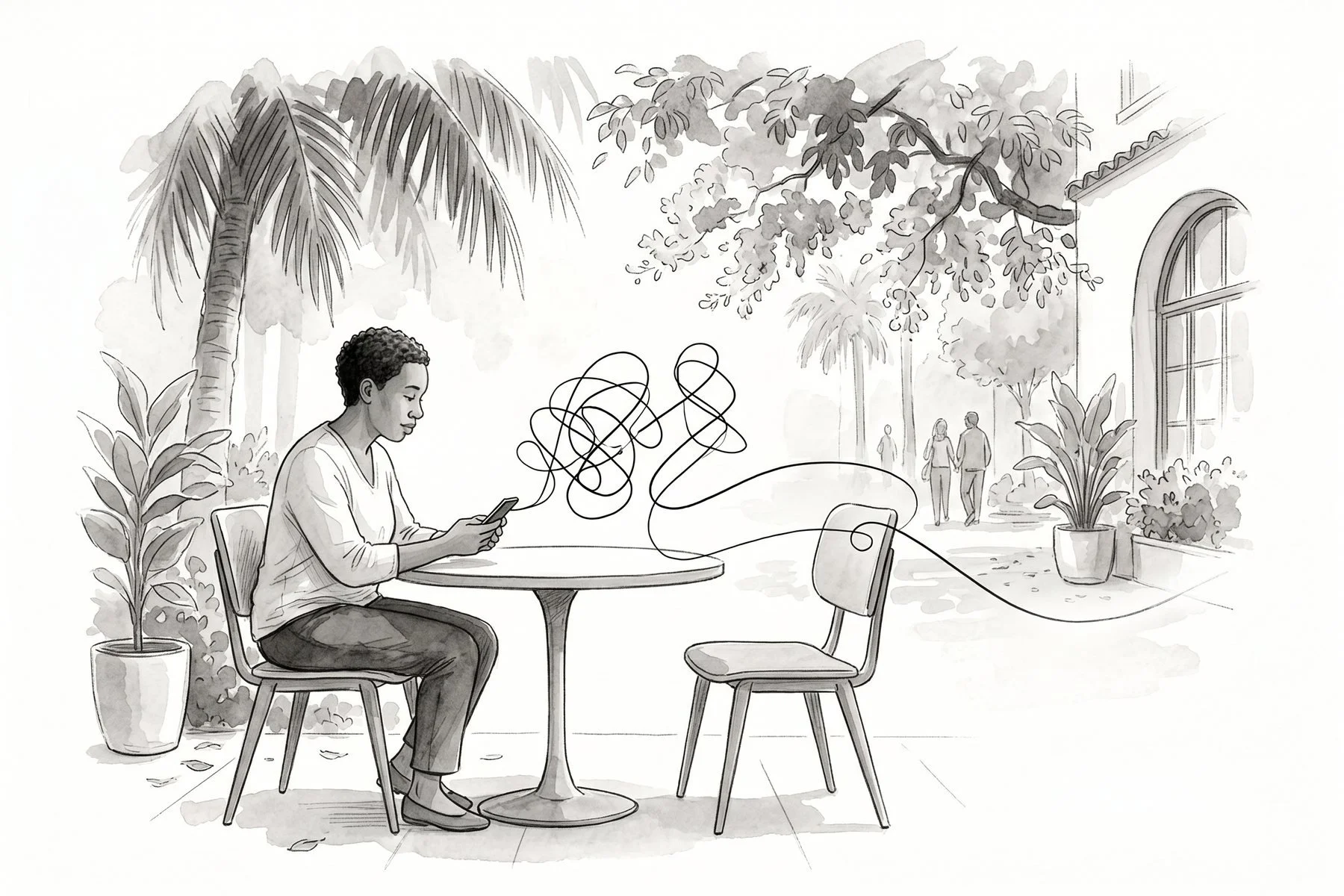
Dating in Los Angeles can feel like its own sport, between apps, situationships, ghosting, and people who seem perfect and then disappear. It's easy to blame the city or the apps, and sometimes that's fair. But if you notice you keep ending up in the same dynamic or pull away at the same moment in every relationship, something deeper may be going on.
Attachment theory offers one of the most useful frameworks for understanding these patterns. This post explains the basics, how attachment shows up in dating, and how therapy can help you build the kind of relationship you actually want.
Attachment in a nutshell
Attachment theory, which began with research on infants and caregivers, describes how our early relationships influence our expectations about closeness, safety, and whether other people will be there for us. Researchers later found that adults show similar patterns in romantic relationships.
The common shorthand describes four styles:
Secure: comfortable with closeness and with independence; able to ask for what you need and tolerate conflict without panicking.
Anxious: craving closeness and reassurance, highly sensitive to signs of distance, prone to worry about being left.
Avoidant: valuing independence, uncomfortable with too much closeness or dependence, tending to pull away when things get intense.
Disorganized (or fearful-avoidant): wanting closeness and fearing it at the same time, often linked to early relationships that were both a source of comfort and of fear.
These categories are useful, but they're not fixed personality types. Most people show a mix of tendencies, and attachment patterns can shift depending on the partner and over time. Attachment security can also be earned over time, which is the hopeful part.
How attachment shows up in dating
Some familiar patterns:
Obsessively checking your phone after a date, reading into every delay in response
Losing interest the moment someone becomes available or clearly interested
Being drawn to people who are hot and cold, and finding stable people "boring"
Feeling suffocated when someone wants more commitment
Staying in relationships that aren't working because being alone feels unbearable
The anxious-avoidant trap: one partner pursues, the other withdraws, and each response intensifies the other
These patterns usually developed for good reasons, as ways of staying connected or safe, and they may simply not serve you now.
How therapy helps
Reading about attachment styles can be illuminating, but insight alone rarely changes how you feel at 11 p.m. waiting for a text. Therapy helps turn understanding into change. An attachment-focused therapist can help you trace where your patterns came from, notice them in real time, soothe the anxiety or discomfort that drives them, and practice new ways of relating.
The therapy relationship itself is part of the work. Having a steady, reliable relationship where you can be honest about your needs and fears is, for many people, a direct experience of what security feels like.
If you're already in a relationship, couples therapy, particularly Emotionally Focused Therapy (EFT), which is built on attachment science, can help both partners understand and interrupt the pursue-withdraw cycle.
Attachment-focused therapy at Therapia Psychotherapy Group
Therapia Psychotherapy Group in Beverly Hills specializes in dating, relationships, attachment, divorce, and heartbreak. Clinicians including Mokgadi (Mo) Mokgobu, APCC, help individuals and couples understand their attachment patterns and build more secure, satisfying relationships. Sessions are available in person or by secure video anywhere in California. At Therapia, cash-pay sessions start at $150 an hour, and the practice is in network with UnitedHealthcare/Optum, so many clients simply pay their copay, typically $20 to $40 a session. Most PPO plans also cover therapy, and out-of-network clients can request a superbill for potential reimbursement.
If you're tired of repeating the same relationship story, Therapia offers a free 15-minute consultation to find a clinician who fits, and attachment patterns can change with the right support.
