
Beyond the Baby Blues: Perinatal and Postpartum Mental Health Support in Los Angeles
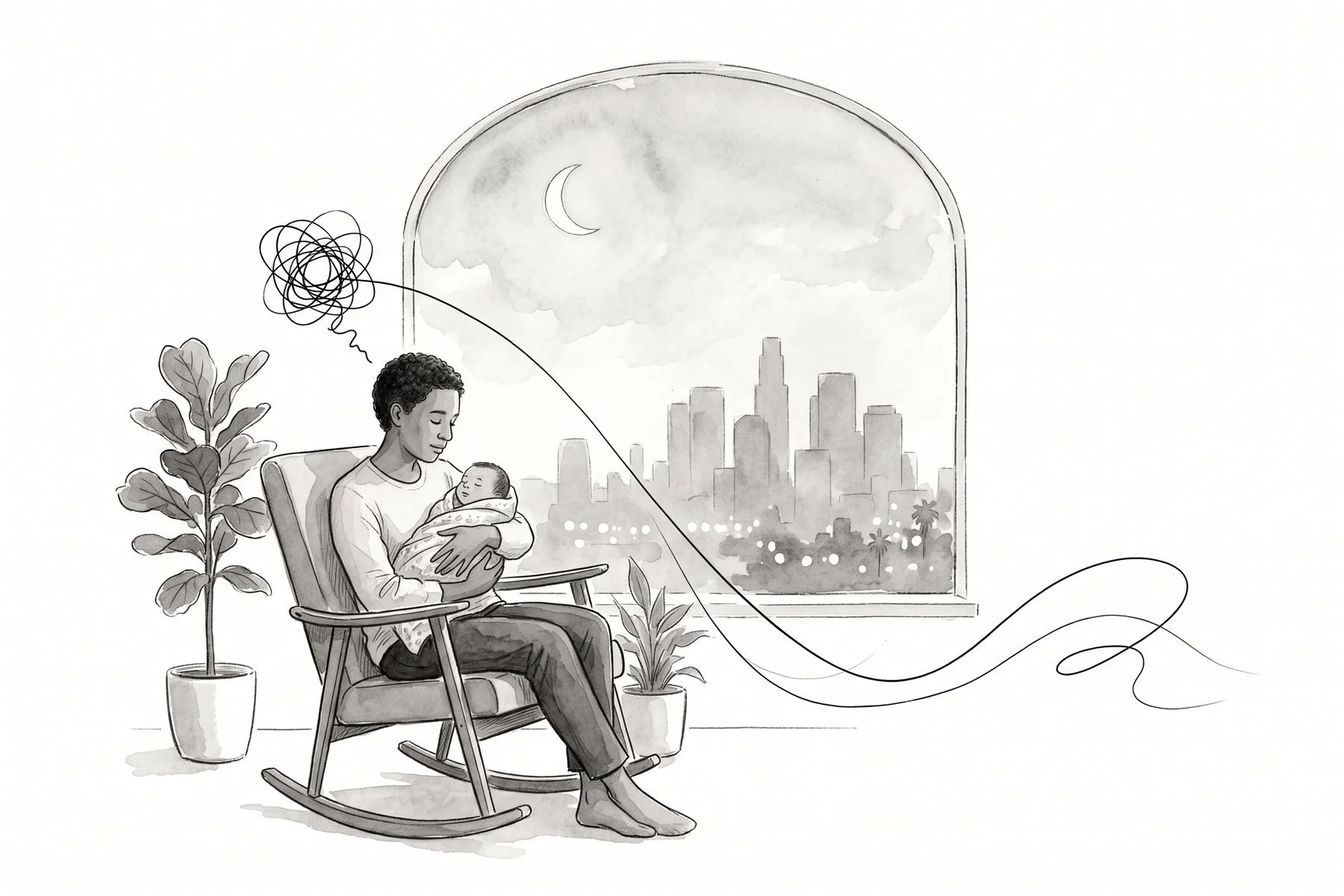
Pregnancy and new parenthood are supposed to be joyful, and often they are. But for many people, they also bring anxiety, sadness, intrusive thoughts, or a sense of not recognizing themselves. Because the cultural script says this should be the happiest time of your life, it can be hard to admit when it isn't.
Perinatal mood and anxiety disorders, the umbrella term for mental health conditions during pregnancy and the first year after birth, are among the most common complications of childbearing. Estimates suggest they affect roughly 1 in 5 birthing parents, and partners can be affected too. They are also very treatable. This post covers the signs, what helps, and where to find support in Los Angeles.
Baby blues vs. something more
The "baby blues" are common in the first two weeks after birth: tearfulness, mood swings, and feeling overwhelmed, usually easing on their own. When symptoms last longer than two weeks, are intense, or start during pregnancy, it may be a perinatal mood or anxiety disorder.
These conditions can look different from what people expect:
Depression may show up as sadness, but also as numbness, irritability, rage, guilt, or feeling disconnected from the baby.
Anxiety can mean constant worry, racing thoughts, trouble sleeping even when the baby sleeps, or physical symptoms like a racing heart.
Perinatal OCD often involves unwanted, disturbing thoughts about harm coming to the baby, sometimes including thoughts of harming the baby yourself. These thoughts are frightening precisely because they go against everything you want. Having them does not mean you'll act on them, and they respond well to treatment.
Birth trauma can follow a frightening or out-of-control birth, with flashbacks, avoidance, and hypervigilance.
Postpartum psychosis is rare but serious. Symptoms like confusion, hallucinations, paranoia, or not sleeping for days require emergency care. Call 911 or go to the nearest emergency room.
Partners and other parents
Partners, including fathers and non-birthing parents, can experience perinatal depression and anxiety too. So can adoptive parents and parents through surrogacy. Pregnancy after loss, NICU stays, and the pressure of returning to work can all add to the strain.
What helps
Therapy is a first-line treatment for perinatal depression and anxiety. Approaches like cognitive behavioral therapy and interpersonal therapy have strong evidence, and a perinatal-informed therapist will also help with the practical realities: sleep, support, identity shifts, relationship changes, and the enormous adjustment of becoming a parent. For some people, medication is also helpful, and many options are compatible with pregnancy and breastfeeding; that's a conversation to have with a prescriber who knows perinatal care.
Resources in Los Angeles and beyond
The National Maternal Mental Health Hotline is free, confidential, and available 24/7 by call or text at 1-833-852-6262 (1-833-TLC-MAMA). Postpartum Support International offers a helpline at 1-800-944-4773, free online support groups, and a directory of perinatal-trained providers. Locally, Maternal Mental Health NOW is a Los Angeles nonprofit focused on improving access to perinatal mental health care, and many LA hospitals offer new-parent support groups.
Perinatal therapy at Therapia Psychotherapy Group
Therapia Psychotherapy Group's women's health specialty includes perinatal psychotherapy. Clinicians including Mokgadi (Mo) Mokgobu, APCC, support parents through pregnancy, birth, the postpartum period, and the parent-child relationship. Secure video sessions are available anywhere in California, which means you can do therapy from home, with the baby nearby if needed. In-person sessions are available in Beverly Hills. At Therapia, cash-pay sessions start at $150 an hour, and the practice is in network with UnitedHealthcare/Optum, so many clients simply pay their copay, typically $20 to $40 a session. Most PPO plans also cover therapy, and out-of-network clients can request a superbill for potential reimbursement.
If this season of life doesn't feel the way you expected, you're far from the only parent who feels this way. Therapia offers a free 15-minute consultation to connect you with a clinician who understands perinatal mental health.
