
When Life Changes Shape: Therapy for Career Changes, Moves, and New Chapters
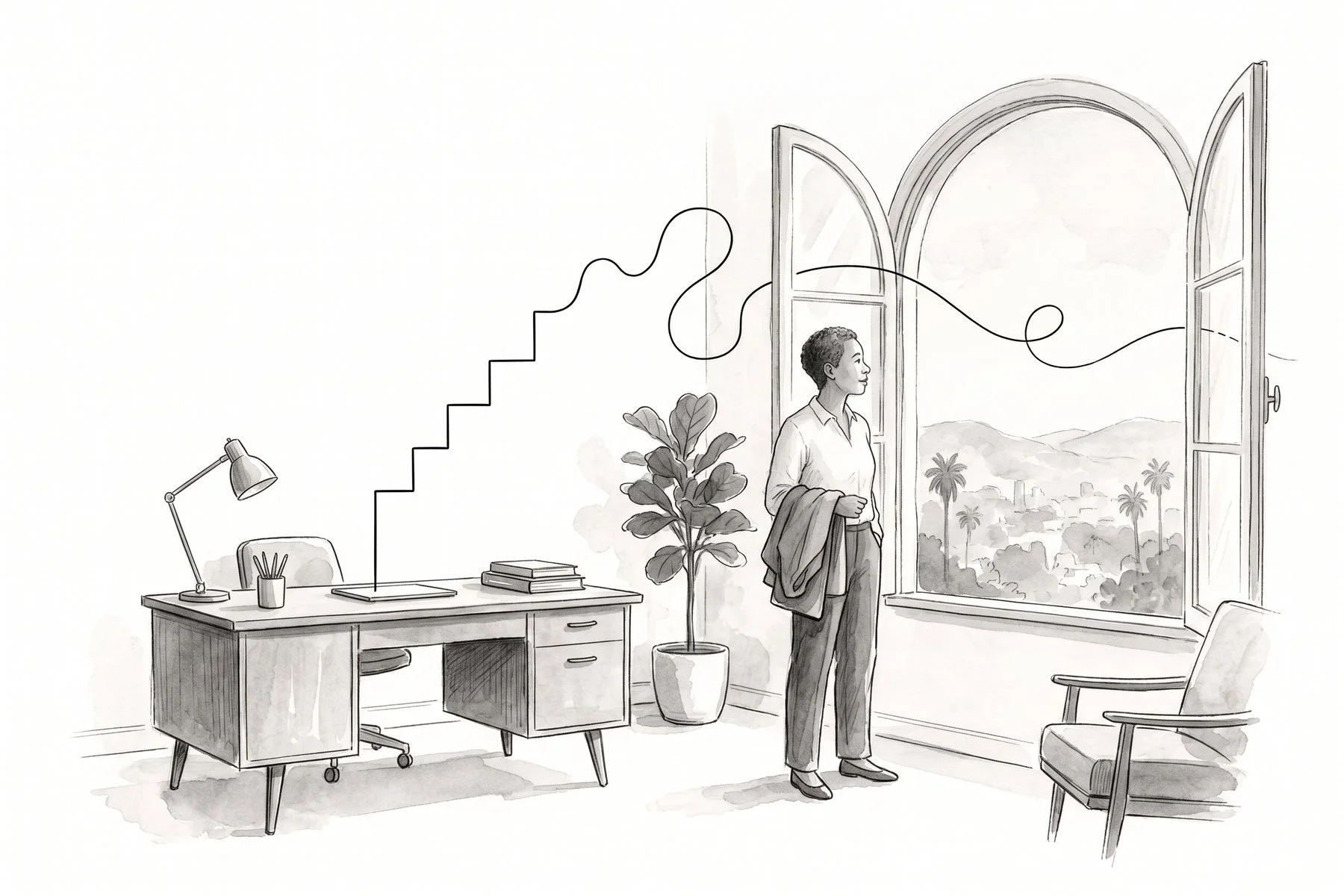
Some of the hardest moments in life don't look like crises from the outside. You got the job, finished the degree, sold the company, moved across the country, watched your youngest leave for college. Even if you chose the change and wanted it, you may feel unmoored.
Transitions, even welcome ones, ask us to let go of an old version of life before the new one feels solid. That in-between space can be disorienting and lonely. This post explores why transitions are so hard and how therapy can help you move through them with more intention.
Why transitions are hard, even the good ones
Every transition involves an ending, a middle, and a beginning. We tend to focus on the beginning, the new job or the new city, and skip over the ending and the middle. But the ending involves real loss: of routines, relationships, roles, and sometimes a sense of who you are. The middle, before the new life takes shape, can feel like limbo.
That's why people are often surprised to feel sad after a promotion, adrift after finishing a big goal, or anxious in a new city they were excited to move to. That's the middle of a transition, and it doesn't mean anything is wrong with you.
Transitions people bring to therapy
Career changes, whether chosen or not: layoffs, pivots to new fields, going freelance, leaving a stable job to build something of your own. Work is tied to identity, status, and security, so changes here ripple everywhere.
Quarter-life questions. Your twenties and early thirties can bring intense pressure to have it figured out, and a sinking sense that you don't.
Midlife re-evaluation. Questioning the life you've built, what you want the second half to look like, and what you may have set aside along the way.
Empty nest. When children leave home, parents often face a surprising mix of relief, grief, and questions about their relationship and purpose.
Moves and relocations. Rebuilding routines, community, and belonging from scratch.
Relationship changes. Moving in together, marriage, becoming a stepparent, or becoming single again.
Health changes. A diagnosis, recovery from illness, or changes in ability that reshape daily life.
Coming out, or claiming a new identity. Transitions in gender, sexuality, faith, or values that change how you move through the world and your relationships.
How therapy helps
Therapy gives you a place to slow down in the middle of change. A therapist can help you name and grieve what's ending, tolerate the uncertainty of not knowing yet, get clearer on your values and what you actually want, and make decisions that fit who you're becoming rather than who you used to be or who others expect you to be.
For some people, a transition also stirs up older material: a career change that brings up a parent's voice, a move that echoes childhood instability. Therapy can help untangle those threads so the present decision isn't driven by the past.
Finding a life transitions therapist in Los Angeles
Look for therapists who mention life transitions, identity, career concerns, or adjustment in their specialties. Some focus on specific transitions, like new parenthood or retirement, while others work more broadly. In a consultation, notice whether they help you think rather than just offering advice.
Life transitions therapy at Therapia Psychotherapy Group
Identity and transitions are a core specialty at Therapia Psychotherapy Group in Beverly Hills, including new chapters, career and relationship changes, bicultural stress, immigration, and retirement. Clinicians including Mokgadi (Mo) Mokgobu, APCC, help adults navigate change with more clarity and less overwhelm. Sessions are available in person or by secure video anywhere in California. At Therapia, cash-pay sessions start at $150 an hour, and the practice is in network with UnitedHealthcare/Optum, so many clients simply pay their copay, typically $20 to $40 a session. Most PPO plans also cover therapy, and out-of-network clients can request a superbill for potential reimbursement.
If you're in between chapters and not sure what comes next, Therapia offers a free 15-minute consultation to find a clinician who fits. You don't have to have it figured out to start.
