
Breast Cancer Under 40: How to Find the Right Therapist
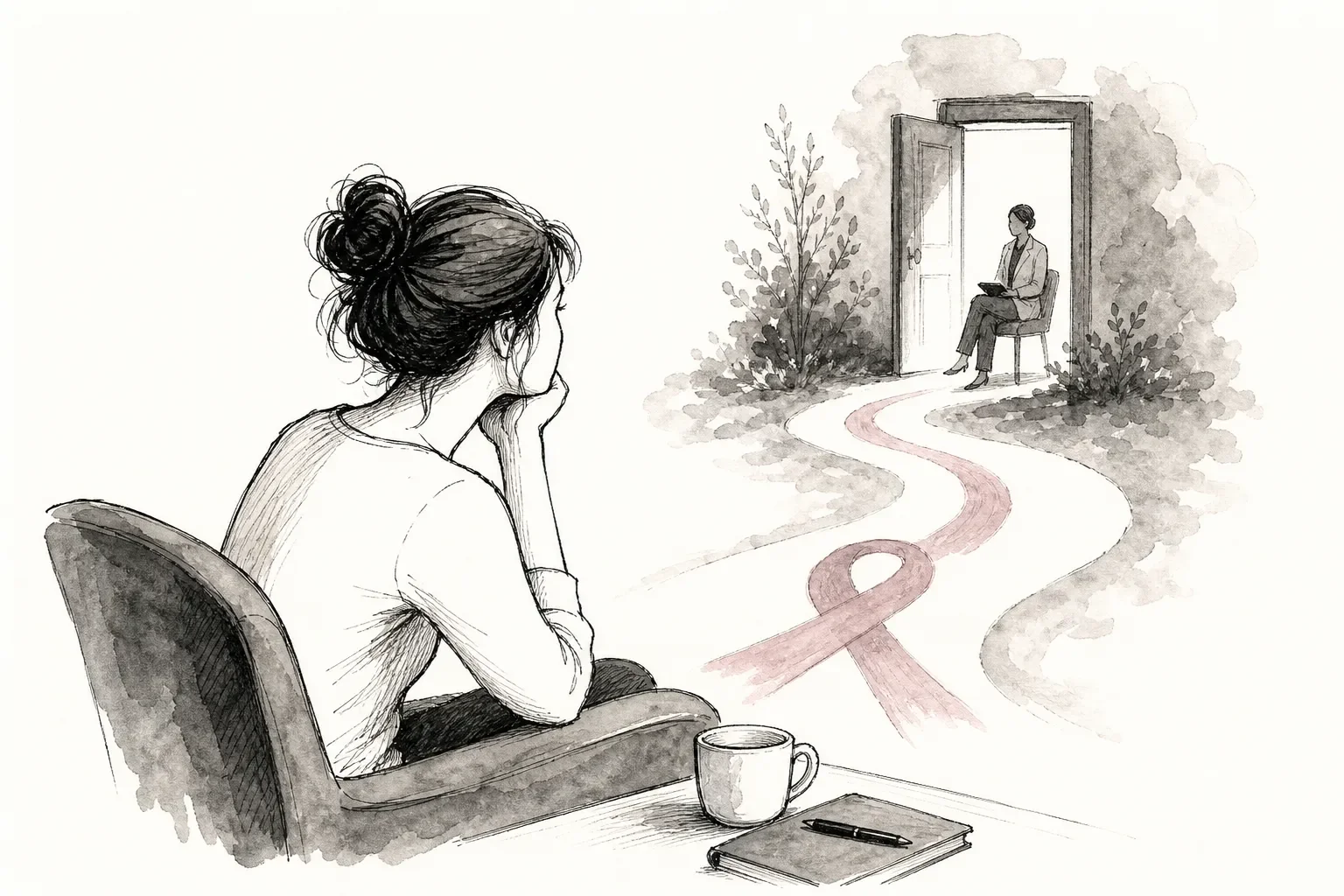
If you received a breast cancer diagnosis under 40, it may have landed in the middle of a life already in motion: a career being built, a relationship being deepened, a family being planned or just getting started. The collision of serious illness with those stakes creates a psychological burden that is measurably different from what women diagnosed at 60+ face, and that difference matters when you're deciding who should help you carry it. At Therapia Psychotherapy Group, we work with women navigating medical trauma and the hormonal, relational, and identity-level disruptions that cancer treatment brings. This article will help you understand which therapy approaches fit your actual situation, what kind of clinician to look for, and how to find the right therapist after a breast cancer diagnosis under 40.
Why a breast cancer diagnosis before 40 hits differently
The psychological research on young breast cancer patients is consistent and sobering: this group reports significantly higher distress than older patients across nearly every measure. The reasons aren't mysterious. When a diagnosis collides with the life stage of building rather than consolidating, the losses are layered in ways that don't apply to someone whose children are grown and whose career is established. Finding a therapist for young women with breast cancer who genuinely understands that specificity is the starting point for effective support.
What the research shows about mental health in this group
The numbers make the case clearly. A large cohort study of women diagnosed at or before age 40 found that 42.7% experienced clinically significant depression early in their cancer journey. Anxiety morbidity appears in approximately 23% of young women in cohort studies. PTSD-like symptoms occur in 6, 23% of breast cancer patients overall, with younger age identified as a confirmed risk factor. Fear of cancer recurrence is particularly prevalent: studies show 61, 76% of young women with early breast cancer meet criteria for moderate-to-high fear of recurrence, and nearly a third still report high fear five years after diagnosis. Body image disturbance is widespread and consistently under-addressed, particularly in the context of surgical changes, hair loss, and the physical effects of endocrine therapy.
The life-stage stressors that separate this from older diagnoses
These statistics reflect something that numbers alone can't fully convey: the specific developmental concerns that compound distress for someone in their 20s or 30s. Chemotherapy and ovarian suppression can threaten fertility and force urgent decisions about egg or embryo preservation under enormous time pressure. Endocrine therapy, particularly when aromatase inhibitors are combined with ovarian suppression, produces sexual side effects including lowered desire, vaginal dryness, pain with intercourse, and reduced arousal that research confirms are more severe and persistent in younger patients.
Partnerships that are still relatively new absorb the strain of a serious illness. Parents of young children face the particular anguish of managing treatment while remaining present for children who need them. Career and financial stability can erode quickly. A therapist after a breast cancer diagnosis under 40 who understands these concerns as developmental, not incidental, is a fundamentally different resource than one who approaches cancer generically.
Therapy approaches matched to what you're actually facing
No single therapy type works for everyone because the presenting challenges vary substantially from person to person. The most effective approach is symptom-matched care, meaning the therapy is chosen based on what's actually causing distress rather than what's most commonly available. Work with a clinician to identify what fits your situation rather than selecting an approach independently.
CBT and ACT for anxiety, fear of recurrence, and daily coping
Cognitive behavioral therapy has the strongest evidence base for cancer-related anxiety, depression, insomnia, and fear of recurrence in breast cancer survivors, including younger patients. In practice, CBT sessions are structured around identifying thought patterns that fuel distress and building concrete skills that patients carry into daily life between sessions. Acceptance and commitment therapy is a reasonable complement for persistent distress and difficulty adjusting to life with ongoing uncertainty, particularly when values-based coping is the goal. Both approaches are active and skill-oriented, which suits people who want tools, not just space to talk.
Trauma counseling after early breast cancer: when the diagnosis itself was traumatic
When the experience of diagnosis, chemotherapy, procedures, or surgical changes has produced intrusive thoughts, avoidance, emotional numbing, or hypervigilance, trauma-focused therapy becomes the appropriate frame. EMDR is a useful option specifically when PTSD-like symptoms are present, given its track record with trauma processing. Trauma counseling after early breast cancer is not a replacement for general psychosocial support; it addresses a specific symptom picture and should be delivered by a clinician trained in these modalities, ideally one with direct experience applying them in a medical trauma context.
Sex therapy and body-image work after treatment changes
Treatment-related sexual changes are widely documented in this population and consistently under-treated. Sex therapy is a form of talk therapy addressing desire, arousal, pain, intimacy, and body image concerns directly. It can provide real relief for these experiences and also support the relationship dynamics that shift alongside them. This specialty is typically accessed alongside individual therapy rather than as a replacement for it. If your primary therapist isn't trained in sex therapy, asking for a referral to a specialist is a reasonable and appropriate request.
The clinician types who specialize in this area
Searching broadly for "a therapist" without knowing what specialization to look for wastes time you don't have. The professional landscape for cancer-related mental health care includes several distinct roles, and knowing what each one covers helps you ask for the right person from the start.
Psycho-oncologists, oncology social workers, and health psychologists
A psycho-oncologist specializes in the psychological and emotional experience of cancer diagnosis, treatment, and survivorship. An oncology social worker addresses both emotional needs and practical navigation, and is often embedded directly in cancer center programs where they can coordinate with your medical team. A licensed clinical psychologist or health psychologist with oncology experience brings evidence-based psychological treatment, including CBT and trauma-focused approaches, to cancer-related distress. These roles overlap substantially, and many comprehensive cancer centers use all three within an interdisciplinary team. If you receive care at a major cancer center, ask your nurse navigator or oncologist for an internal referral before searching externally.
When to add a fertility counselor or sex therapist to your care team
A fertility counselor provides specialized support for the grief, anxiety, and complex decision-making involved when cancer treatment threatens reproductive plans, including the psychological dimensions of egg freezing, embryo cryopreservation, and the possibility that treatment may affect future fertility regardless of preservation steps taken. A sex therapist addresses treatment-related sexual dysfunction and intimacy concerns that fall outside the training of most general therapists. These specialists are additions to your care team when a specific domain of need exceeds a generalist's scope, not replacements for a primary therapist who holds the full clinical picture.
Where to find a therapist after a breast cancer diagnosis under 40
The most efficient path starts with specialized programs and moves outward to directories and telehealth when needed. Don't begin with a general search if you have access to a cancer center with embedded psychosocial services.
Hospital-based psycho-oncology programs
Hospital-based psycho-oncology programs are the strongest fit for patients currently receiving treatment at a major cancer center. Many hospitals in Los Angeles offer brief (10 sessions on average) therapy for cancer patients and their loved ones. The Simms/Mann UCLA Center for Integrative Oncology provides free psychosocial support for patients and loved ones, including individual therapy, support groups, and coping resources; call 310-794-6644 to connect. Cedars-Sinai's Patient and Family Support Program offers psychiatry and talk therapy specifically for cancer patients and can be reached at 310-423-0638. City of Hope and Beverly Hills Cancer Center both embed integrative counseling into their care models. Waitlists are common at these programs, and access often depends on whether you are currently receiving treatment at that specific institution, worth confirming directly with each center before counting on a slot.
Nonprofit cancer counseling options in Los Angeles
Nonprofit programs fill a meaningful gap, particularly for patients who are between treatment phases or who want support outside the medical setting. Cancer Support Community Los Angeles offers 8 sessions of free individual counseling, support groups, and family programs for anyone affected by cancer, including caregivers. Reach them at 310-314-2555 or at their Los Angeles office at 1990 S. Bundy Drive. Cancer Support Community South Bay extends similar free services to the South Bay region at 310-376-3550. CancerCare provides free telephone counseling and online support groups nationally at 800-813-4673. These resources are worth using on their own or as a bridge while evaluating private-practice options.
Private practice: choosing a therapist for cancer in Los Angeles, CA
For patients who want longer-term support and consistent one-on-one psychotherapy outside a hospital setting, without limits on the number of sessions, a specialized private practice offers greater scheduling continuity, clinical depth, and flexibility. Therapia Psychotherapy Group, based in Beverly Hills, maintains a formal specialization in cancer, chronic illness, and medical trauma. Many of the therapists at Therapia completed their clinical training at Cancer Support Center Los Angeles, which means they have formidable clinical experience with psycho-oncology. The practice sees clients in person and offers secure video therapy to clients anywhere in California, an important option for patients managing treatment-related fatigue or unpredictable chemotherapy schedules. A free 15-minute matching consultation helps patients find the right clinician before committing to a paid session.
Questions to ask a therapist after an early breast cancer diagnosis
Many licensed therapists are skilled generalists with limited experience at the intersection of oncology, fertility, sexual health, and trauma. Asking directly during an initial call is the fastest way to know whether someone has the specific background your situation requires. A good clinician will welcome these questions rather than deflect them.
Questions about cancer, trauma, and survivorship experience
Have you worked with clients navigating cancer diagnosis, active treatment, or survivorship?
How do you approach fear of recurrence and cancer-related anxiety?
Do you use trauma-informed methods, and what does that look like in your sessions?
Have you worked with clients experiencing medical trauma, including trauma from procedures, scans, or treatment side effects?
Questions about fertility, sexual health, and parenting
Do you have experience supporting clients whose fertility or family-building plans were affected by medical treatment?
Are you comfortable discussing sexual health concerns, including changes in desire, pain, arousal, and body image?
Have you worked with clients who are parenting young children while managing serious illness?
If a concern falls outside your scope, how do you handle referrals to specialists?
Practical questions about logistics and access
Do you offer telehealth sessions?
Are you in-network with my insurance, or can you provide a superbill for out-of-network reimbursement?
How long is the wait to start?
Getting started this week
Navigating the mental health system while managing a cancer diagnosis is its own form of stress, and it shouldn't be. The right therapist for a cancer patient in Los Angeles is licensed, has genuine oncology experience reflected in their actual caseload, and offers a practical setup — telehealth, insurance compatibility, and scheduling flexibility — that fits how you're living right now, not how you'd be living without a serious illness.
The options in Los Angeles are real and accessible: free nonprofit programs for immediate support, hospital-based psycho-oncology programs for patients undergoing active treatment at major centers, and private practices with dedicated cancer specialties for patients seeking ongoing, consistent one-on-one care. None of these options is right for everyone, and matching yourself to the right level of care is worth the time it takes.
If you need a therapist for cancer in Los Angeles, CA, and want a straightforward starting point, Therapia Psychotherapy Group offers a free 15-minute consultation to match you with a clinician whose background aligns with what you're carrying. Reach out to begin that conversation. Finding a therapist who truly knows this terrain is possible, and you don't have to figure it out alone.
You deserve a clinician who understands this specifically
A breast cancer diagnosis under 40 comes with a distinct set of psychological challenges, and those challenges deserve a clinician who understands them specifically, not one who treats cancer as a variation on general medical stress. You now have the framework to identify the right therapy approach for your symptoms, the right type of specialist to look for, the questions to ask a therapist after an early breast cancer diagnosis, and a clear set of resources to start with today.
The next step is making contact. If you're in California and want a practice that brings together medical trauma, women's health, and the relational and hormonal dimensions of cancer treatment, reach out to Therapia Psychotherapy Group. Book a consultation, make the call, send the email. Their free 15-minute matching consultation is exactly the right place to start.
