
Caregiver Burnout: Signs You’re Running on Empty, and Where to Find Support in Los Angeles
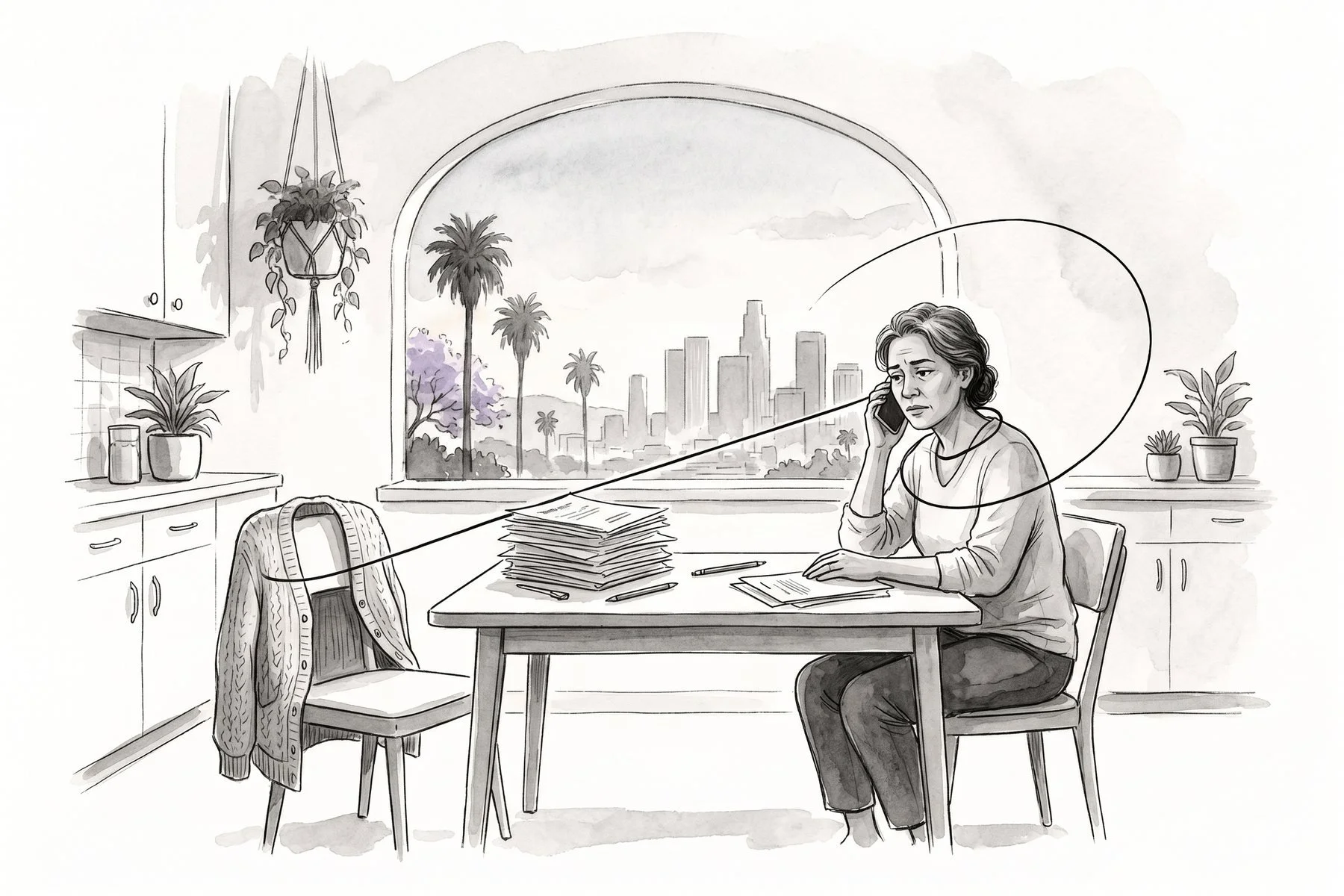
Caregivers are often the last people to ask for help. When someone you love is sick, aging, or disabled, your own needs start to feel like a luxury, or even selfish. You tell yourself you'll rest once things settle down, but they rarely do.
If you're caring for a parent with dementia, a partner through cancer treatment, a child with complex medical needs, or a family member with a serious mental illness, this post is for you. It covers the signs of caregiver burnout, why caregivers need their own support, and where to find it in Los Angeles.
How caregiving changes relationships
Caregiving changes relationships. An adult child can become a parent's advocate and nurse, and a spouse can become a medication manager and appointment scheduler. Siblings who got along fine can find themselves in bitter conflict over who is doing more. The person you're caring for may be grateful, or they may be frightened, angry, or unable to recognize what you're giving up.
For many families in Los Angeles, caregiving also happens across generations under one roof, or across cultures, where expectations about who cares for whom run deep. That can be a source of meaning and strength. It can also make it very hard to say "I'm struggling" without feeling like you're failing your family.
Signs of caregiver burnout
Burnout builds slowly, so it's easy to miss. Common signs include:
Exhaustion that sleep doesn't fix
Getting sick more often, or neglecting your own medical care
Irritability, resentment, or snapping at the person you're caring for, followed by guilt
Withdrawing from friends and activities you used to enjoy
Feeling numb, hopeless, or trapped
Anxiety that something will go wrong the moment you step away
Grieving the person while they're still here
Fantasizing about it all being over, and feeling ashamed of that thought
That last one is more common than most caregivers realize. Wishing for relief from an impossible situation says nothing about how much you love the person, and it's a normal response to too much responsibility for too long.
Why caregivers need their own therapist
Most support in caregiving situations is organized around the patient. Doctors, nurses, and social workers focus on the person who is ill, and caregivers are often treated as members of the care team rather than as people with their own needs.
Therapy gives you a place that's only about you. It can help you set boundaries without guilt, make hard decisions about care, manage conflict with family members, process anticipatory grief, and figure out what sustainable caregiving actually looks like for your situation. It's also a place to say the things you can't say anywhere else.
Caregiver support across Los Angeles
Los Angeles has a number of free resources for caregivers, often organized by the condition your loved one has.
For dementia caregivers, the Alzheimer's Association runs a free 24/7 helpline at (800) 272-3900, and Alzheimer's Los Angeles offers local support groups, education, and care counseling.
For cancer caregivers, Cancer Support Community Los Angeles offers free support groups and counseling for caregivers and family members as well as patients. Call (310) 314-2555.
For caregivers of people with serious mental illness, NAMI's local affiliates in LA County offer free family education courses and support groups.
Respite care can give you short breaks from caregiving. Ask your loved one's care team, a hospice, or a local caregiver resource center about options in your area.
Caregiver therapy at Therapia Psychotherapy Group
Therapia Psychotherapy Group in Beverly Hills specializes in health, medical trauma, and caregiving. Our clinicians work with adult children caring for aging parents, partners of people with serious illness, parents of medically complex children, and caregivers facing the end of a loved one's life. Sessions are available in person or by secure video anywhere in California, which makes it easier to fit therapy in around caregiving responsibilities. At Therapia, cash-pay sessions start at $150 an hour, and the practice is in network with UnitedHealthcare/Optum, so many clients simply pay their copay, typically $20 to $40 a session. Most PPO plans also cover therapy, and out-of-network clients can request a superbill for potential reimbursement.
If you've been taking care of everyone but yourself, Therapia offers a free 15-minute consultation to help you find a clinician who understands what caregiving asks of you, because your wellbeing matters in this too.
